I’ve dealt with tonsil stones for years, so I know how this goes: something feels stuck at the back of your throat, your breath starts telling on you, and you go looking for something — anything — to blast them out. Most people land on a water flosser for tonsil stones — an electric one, full pressure. Don’t. It’s too much for tissue that delicate, and there’s a manual way that works better anyway. Here’s the exact routine I run, in three zones.
As an Amazon Associate I earn from qualifying purchases. This is the routine I actually use, and I flag the picks I haven’t personally tried yet. I’m not a dentist — just someone who’s kept these things under control for years.
Why a water flosser for tonsil stones doesn’t work
Tonsil stones live in the crypts — the little pockets in your tonsils where dead cells, mucus, and bacteria collect. The stones themselves are soft; you can smush one between your fingers. The tissue around them is not. An electric water flosser’s jet is built for teeth — hard surfaces that don’t bleed — and at full pressure it hits your tonsils like a tiny fire hose. It hurts, it can make you bleed, and it can push debris deeper instead of clearing it. What you want back there is low pressure you control by hand: a syringe or a manual irrigator, aimed exactly where you can see. Water, yes. A pressure washer, no.
Zone 1: Keep them from forming
The single thing that does the most for me, by far, is the purple Listerine — Total Care. When I’m consistent with it, the stones mostly stop building up. It’s the one part of this routine I never skip, and I keep the two-pack around so I never run out. check current price on Amazon
The other half of prevention is your tongue. Bacteria sit on it overnight, and while you sleep they can migrate into your tonsil crypts — fresh material for new stones. Scrape your tongue before you rinse. It’s the tool everyone skips, and it matters as much as the mouthwash.
Zone 2: Get them out without hurting yourself
When you find one — good mirror, open wide, decent light — it’s a two-step process. Step one is gentle pressure: press the flat side of a press tool lightly against the side of the tonsil to squish things around until a stone comes into view. You’re nudging, not digging. Sometimes that alone pushes one out. Step two is water: fill a dental syringe, hold the fine tip near the crypt — near it, not jammed into it — and spray by hand. The water gets into the little holes where stones stick and flushes them out. That’s the part that actually works, and it’s dramatically less painful than poking around with metal.
This is pretty much exactly the kit I keep at home: seven pieces, and the two that matter most are the syringe and the tongue scraper. You can buy a cheaper version of the same thing; what matters is a fine-tip syringe and a scraper. If your stones are in a really bad phase, get one with a light on the tool so you can actually see the crypts. check current price on Amazon
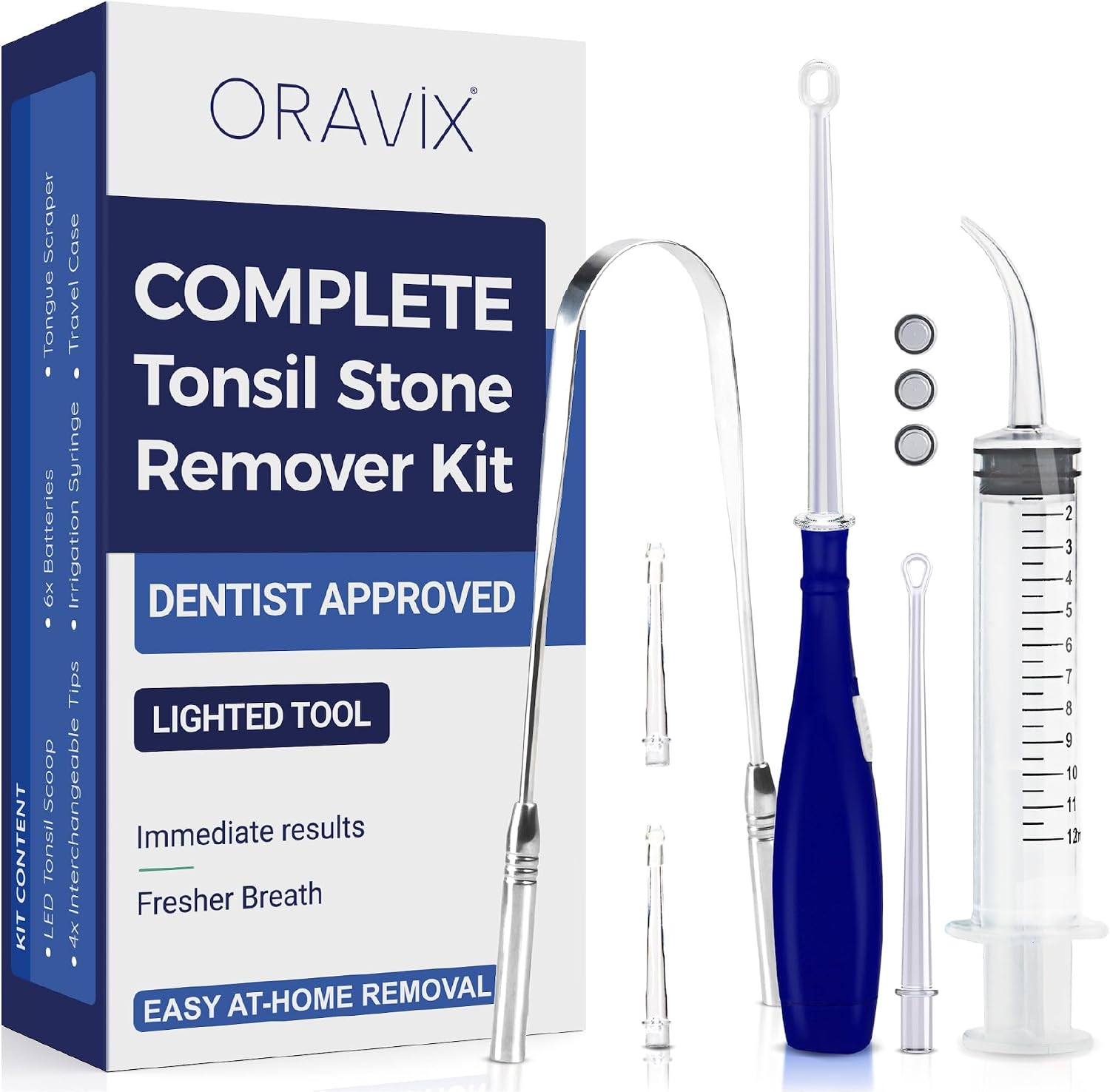
Two hard-earned notes. Skip the diggers — never put metal into the crypts; that’s how people cause damage. And skip the cameras: I’ve bought them, they work okay, but it is genuinely hard to see into your own tonsils with one. A good mirror beats a camera every time.
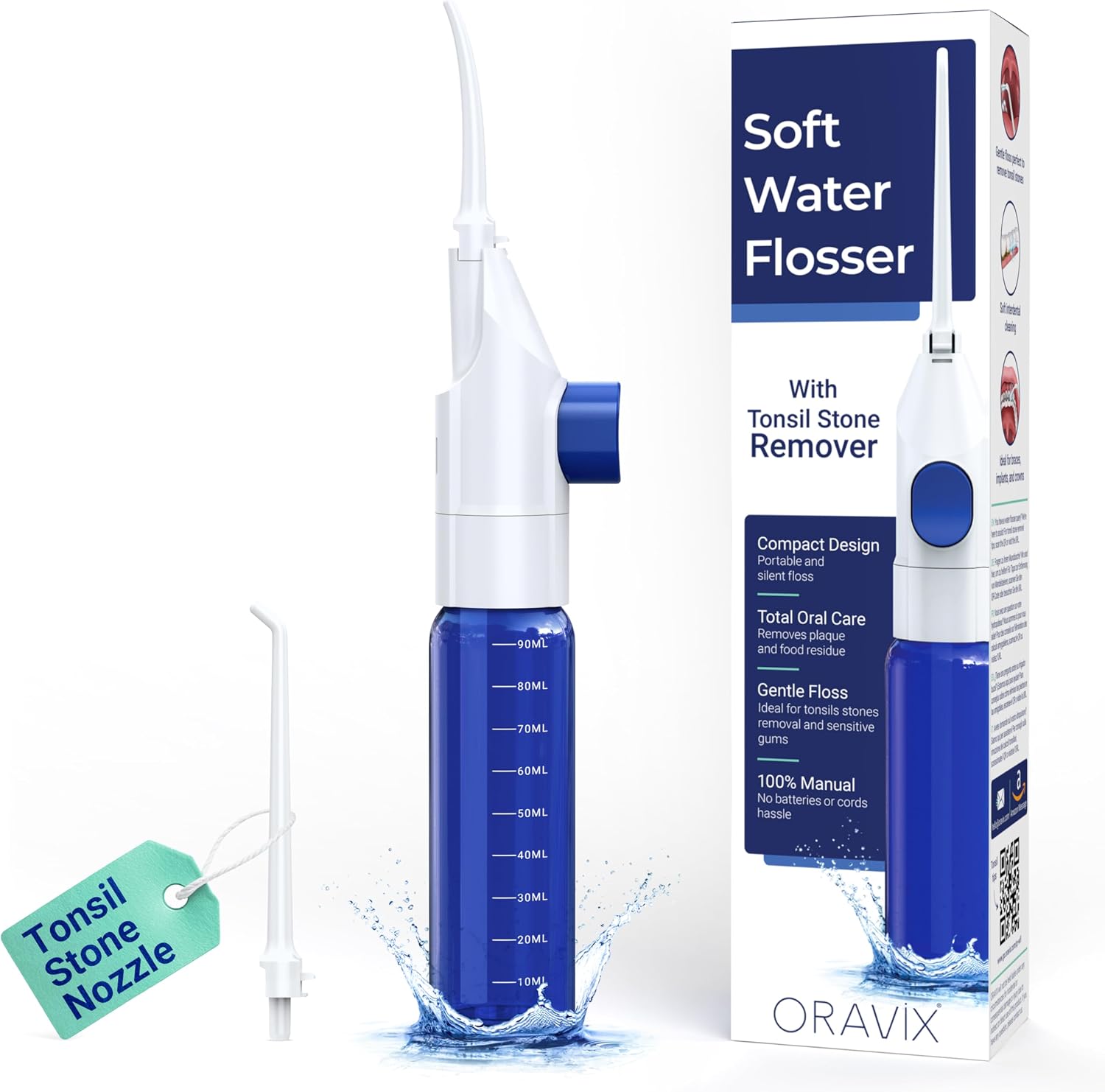
One piece of gear I haven’t used yet — my daily driver is the cheap syringe — but if you want a purpose-built tool, this is the design I’d recommend: a manual push-button irrigator, no batteries, no cable, with a bigger tank than a syringe, so you can flush more of the crypts in one session. It’s the same method that’s always worked for me — hand-controlled water, patient pressure — just in a nicer package. check current price on Amazon
The unglamorous truth: most of this fight is just getting used to having something at the back of your mouth. It’s training your gag reflex, and that takes practice. Water helps enormously here — spraying is far less likely to trigger your gag reflex than poking with tools, and it hurts less. Once you’re past the phase where stones are really bad and hard to get out, this all becomes maintenance: check every once in a while, flush what you find, move on with your day.
Zone 3: Keep your teeth clean — where the electric flosser belongs
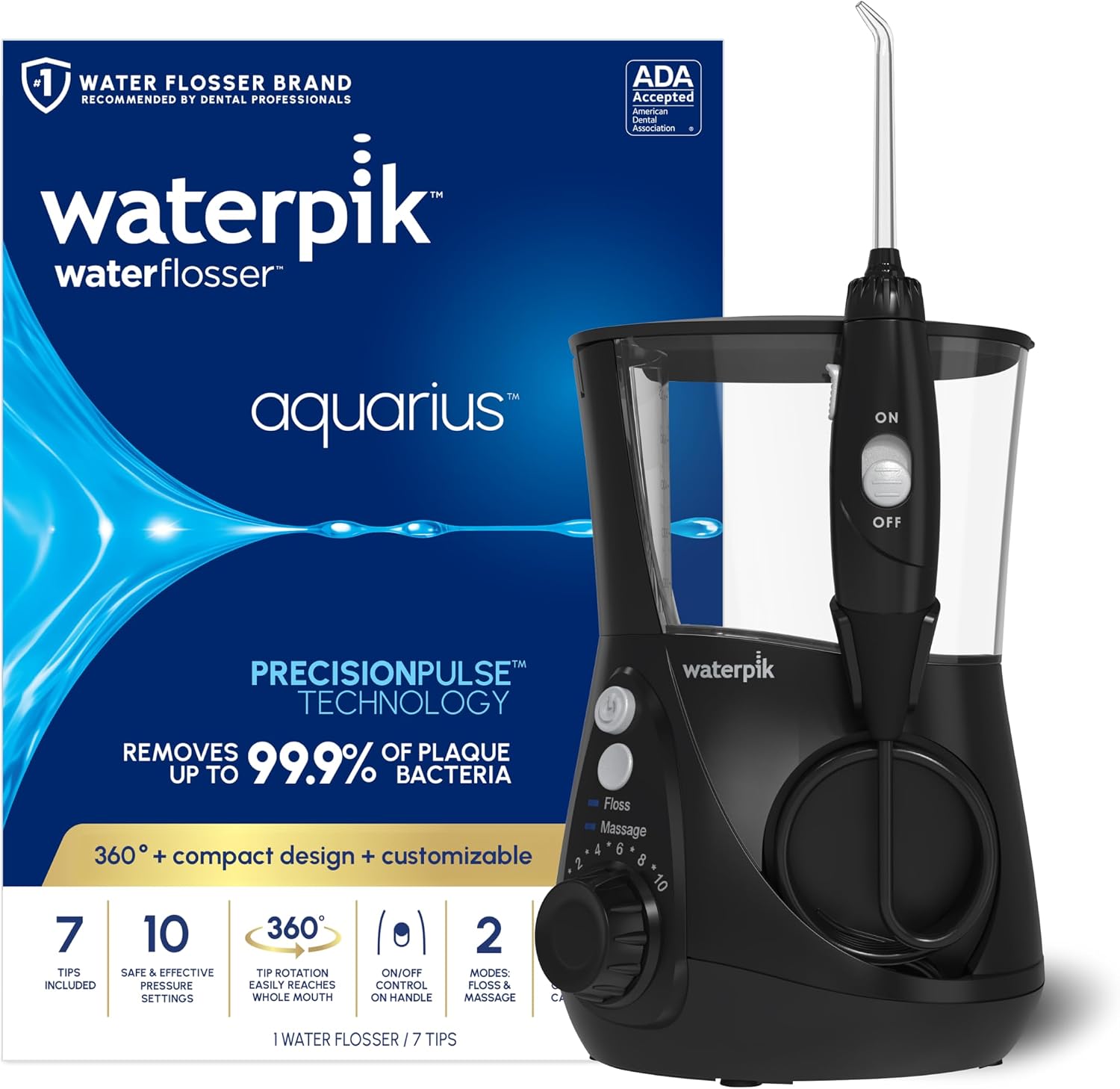
The electric water flosser still earns its place — I use mine every day, on my teeth. It handles what brushing misses, and a cleaner mouth is half this fight. Mine is the full-size Waterpik Aquarius: 10 settings, seven tips, built-in timer. I run it on max because my gums can take it; turn yours down if you’re not there yet. check current price on Amazon
One downside to know: at max pressure, these start losing pressure after about a year, so if you’re a max-setting person like me, plan on replacing it eventually. It’s still the one I’d buy. And if counter space is the issue, the Cordless Pulse is the compact Waterpik — that’s the only reason I’d ever choose a handheld over the full-size. Stick with the Waterpik brand either way. check current price on Amazon
FAQ
Can I use an electric water flosser on my tonsils?
I wouldn’t. Even at low settings, an electric flosser’s jet is a lot for tonsil tissue — it hurts, it can cause bleeding, and it still misses the crypts where stones hide. Use hand-controlled water instead: a syringe or a manual irrigator. Slower, gentler, and in my experience, more effective.
How do I remove tonsil stones without digging?
Two moves: light side pressure with a press tool to bring a stone into view, then water. A dental syringe with a fine tip, aimed near the crypt, sprayed by hand — that flushes stones out of the little pockets. No jab, no dig. That pair, plus a good mirror, handles nearly everything.
What’s the best way to prevent tonsil stones?
For me it’s consistency: purple Listerine Total Care twice a day, plus scraping my tongue before rinsing, because tongue bacteria feed the crypts overnight. Once you’re past the bad phase it’s maintenance — a quick check now and then, flush what you find, keep rinsing.
Bottom line
Almost everything that’s worked for me is boredom and technique: rinse, scrape, and when you find a stone, flush it out with water instead of digging at it. Train the gag reflex a little at a time, and save the electric flosser for your teeth. Do that consistently and the whole problem goes from a weekly annoyance to a once-in-a-while check. Three zones, no gadgets required.