The watches I owned before this one lied to me about sleep. I’d wake up twice in the night and the app would hand me a solid eight hours. That’s the whole reason I spent real money — I wanted numbers I could trust, not numbers that looked nice. I bought the Garmin Forerunner 255 Music on August 6, 2025, and it’s been on my wrist every day since. Fourteen months. This Garmin Forerunner 255 review is what that’s actually been like.
As an Amazon Associate I earn from qualifying purchases. I bought this product myself and this is my own experience with it. Links below to the watch and to the accessories I bought for it are affiliate links.
My Garmin Forerunner 255 review in short
If you train and you like looking at the data afterward, this is the cheapest watch that takes you seriously. I wear it all day and sleep in it, and the sleep tracking alone justifies it against every budget watch I’ve owned. If you want a step counter and a nice watch face, you’ll be paying for a pile of running metrics you’ll never open. Mine has been flawless enough that I’d buy it again today at full price, even knowing newer models exist.
What held up
- Sleep tracking that finally matches what actually happened in the night — the single most accurate thing on my wrist
- One charge a week, running 1–2 hours a day, for 14 months straight
- The stock silicone band, still on the watch, still holding its tension, still not funky
- GPS that stayed locked through 4-hour runs
What didn’t / annoyed me
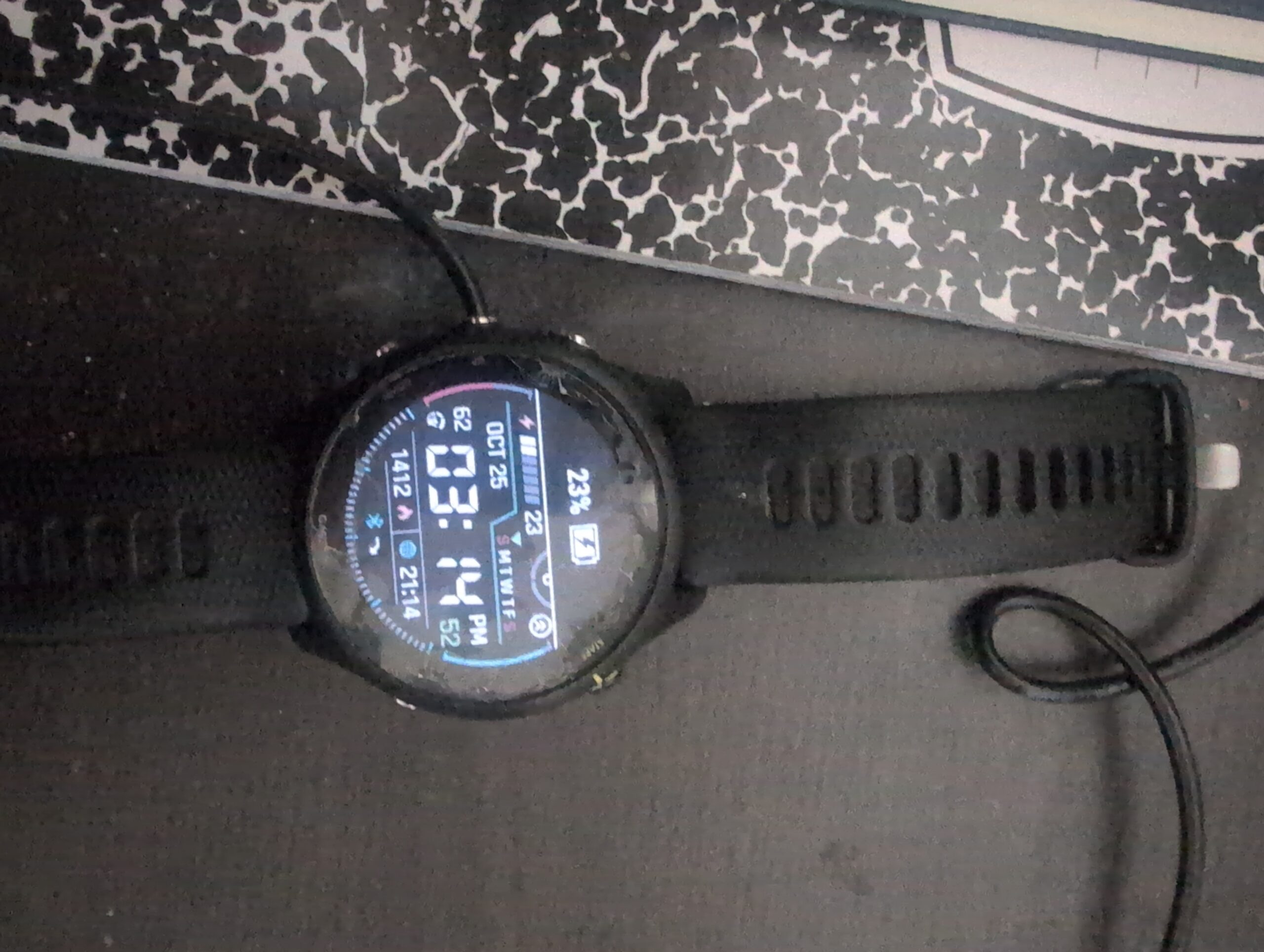
- The charger in the box is a cable that sticks out sideways — the watch won’t sit flush on anything
- No screen protection included, and at this price you want some
- The stock band demands a nightly two-minute routine — skip it and you will hate the band
Why I bought it
I went through a run of cheap trackers first. Amazfit, plus a couple of the no-name ones off Amazon, all of them hovering around or under a hundred bucks. They all did the same thing: tracked heart rate loosely, tracked sleep generously, and never agreed with each other or with me.
What broke my patience was the sleep data. I’m analytical by nature — I like seeing a number and trusting it — and a watch that tells me I slept great when I was up at 3 a.m. is worse than no watch at all. It’s a false signal, and I was making decisions off it.
The 255 Music was the first watch I bought that didn’t feel like a toy. I didn’t want the most expensive Garmin on the shelf. I wanted the cheapest one that was actually serious, and that’s what this is. It’s also the watch that finally made me stop settling for a tracker that only half worked.
Fourteen months of all-day, all-night wear
I wear it for everything. Running, the gym, cardio, boxing, sleep, calories, all of it — every feature the thing has, I’ve used it, and I don’t take it off for any of them. The only time it leaves my wrist is when it’s sitting on the charger. That’s not discipline on my part; it’s just that there’s no reason to take it off.
The sleep tracking is the part I’d pay for again. All day, all night, it’s tracking, and the read it gives me matches my night. That’s the difference between this watch and everything cheaper I’ve worn — the cheap ones never come close, and I’ve stopped second-guessing the number.
Then there’s the running. This is a runner’s watch before it’s anything else. I’ve never seen this many metrics on a wrist, and the run data specifically is deeper than the general workout tracking, which is already deep. What I actually use it for is the post-run look: I finish, sit down, and go through what the watch recorded. Seeing a run get measurably better on a screen is what keeps me training. If the data were vague I’d have quit months ago.
Battery is the number people always ask about. With my normal week — 1 to 2 hours of training a day — I charge it once a week. In a week where I don’t train at all, the same watch goes 2 to 3 weeks, because the workouts are what eat the battery. I’ve done 4-hour runs on it and the GPS kept up the whole way, on the same weekly charge. GPS is the only thing that puts a visible dent in a single day.
The nightly routine that keeps the silicone band wearable
This is the part nobody tells you when they complain about silicone bands. People post about rashes and irritation and blame the strap. In my experience it’s not the strap. It’s that they don’t clean it, and they don’t clean the wrist under it.
My routine takes a couple of minutes. I shower before bed, which handles the wrist. Then I take one individually wrapped alcohol prep pad — the ones that come 400 to a box — and wipe down the whole watch, paying attention to the side that touches my skin. If it got wet under there during the day, I dry it off when I get a chance. Then it goes back on my wrist and I go to bed.
Fourteen months of that, and I’ve had zero wrist issues. Not one. And the only times I’ve had any irritation at all were the nights I cleaned the watch but not my wrist, or the wrist but not the watch. Both parts or neither — half the job doesn’t work.
The original band is still on the watch. It looks smoothed out where it’s been worn, because it has been worn, but it’s never gone funky and it still holds tight.
I also own a 22 mm nylon band 3-pack for it, and I understand why people like fabric. The catch is that fabric soaks up whatever you’re doing. Sweat goes into the band, and then you’re washing it with soap, rinsing the soap out, drying it, and reaching for the second one while it dries — which is why they sell them in threes. That’s more work than the silicone plus a nightly wipe, for the same result.
What I’d change
The charger in the box is the one genuine miss. It’s a cable, and it comes out the side of the watch, so the watch can’t sit flush on anything — it ends up angled off to the side on whatever surface you leave it on. I replaced it with a flat dock-style charger, put a strip of Velcro on the back, and stuck it to a fixed spot. Now I set the watch on it, it clips on, and it stays vertical. It charges, it looks intentional, and it’s the charger that should have been in the box. It’s an inexpensive third-party part, so I’m not upset about the money — I just think Garmin shipped the wrong thing with a watch this good.
Second: no screen protector in the box. I’ve broken watch screens before, and it’s always the same story — phone, wallet and watch in a pocket for a second, a stumble, and you land on that side. Or you catch a corner on something. At this price I want glass on it, so I got a four-pack of tempered glass screen protectors made for this case size. Buy one with the watch.
Third, and it’s not a defect so much as a condition of ownership: the stock band only works if you maintain it. If you’re not going to do the nightly wipe, you’re going to hate silicone and you should plan on fabric from day one.
Key specs
| What | Detail |
|---|---|
| Model | Garmin Forerunner 255 Music, black (010-02641-20) |
| Music | On-watch music with Bluetooth headphones — the reason to get the Music version |
| Battery, my use | ~1 week at 1–2 hrs of training a day; 2–3 weeks in a no-workout week |
| GPS | Held a lock through 4-hour runs on the same weekly charge |
| Band | 22 mm quick-release; stock silicone, and third-party 22 mm bands fit |
| Charging | Garmin charging cable in the box; the dock I use is a separate part |
Specs above come from the product listing and the accessories made to fit this watch. Everything else in this review is from wearing it.
The three things I’d buy with it on day one
Everything below is something I actually own and use with this watch, not a wishlist.
- Flat dock charger — the watch sits vertical on it instead of dangling off a cable. Velcro it to one spot and it looks like part of the desk.
- Tempered glass screen protector, 4-pack — the screen is the one part you can’t replace cheaply. Four packs mean a spare when you inevitably chip one.
- Alcohol prep pads, 400 count — this is the band-maintenance supply. One pad a night, and the stock silicone stays wearable for years.
The 22 mm nylon 3-pack is the optional fourth. I own it and it’s fine, but it only makes sense if you know you won’t keep up with the nightly wipe, or you want a different look for the gym.
Who should skip it
If you want a step counter and nothing else, buy a step counter. If you don’t want a screen on your wrist at all, buy something without one. And if all you want is a rough, high-level picture of your day — steps, resting heart rate, sleep in broad strokes — an Amazfit does that fine for a fraction of the money, and you won’t notice what you’re missing.
This watch is for people who train and want to see the detail. If that’s not you, most of what you’re paying for is features you’ll never open.
FAQ
Is the Garmin Forerunner 255 still worth it?
Yes, from my side of it. I’ve worn mine daily for 14 months and nothing about it has made me look at a newer model. It’s an older watch now, which works in your favor — you’re not paying new-model money for something that still tracks everything I need. If mine died tomorrow I’d buy another one.
Is the 255 or the 265 the better pick?
I haven’t used the 265, so I can’t compare them from experience and I won’t pretend to. What I can tell you is that nothing I do — daily training, 4-hour runs, all-night sleep tracking — has left me wishing I’d bought something newer. If the newer model’s screen features matter to you, that’s a call I can’t make for you.
How long does the battery actually last?
About a week between charges when I’m training 1 to 2 hours a day. In a week with no workouts it stretches to 2 or 3 weeks, because workout tracking is what drains it. GPS is the only thing that visibly shortens a single day, and even 4-hour runs fit inside that weekly charge.
Bottom line
Fourteen months in, this is the watch I’d buy again at full price, and it’s the minimum I’d recommend to anyone who wants a serious training watch rather than a step counter. The watch itself is faultless. The dock charger, the screen protector, and the prep pads are the three things that make owning it easy — buy them with the watch and you skip every complaint I’d otherwise have.