My under-sink RO system had no way to stop it: no valve at the inlet, no valves on the output lines — just water, always live, and me sitting around a little nervous about it. I ordered this five-pack of PureSec inline RO shut off valves in January. Eight months later, three or four of the five are in service, the rest live in my spare-parts bucket, and I honestly don’t remember how I ran the system without them.
As an Amazon Associate I earn from qualifying purchases. I bought this product myself and this is my own experience with it.
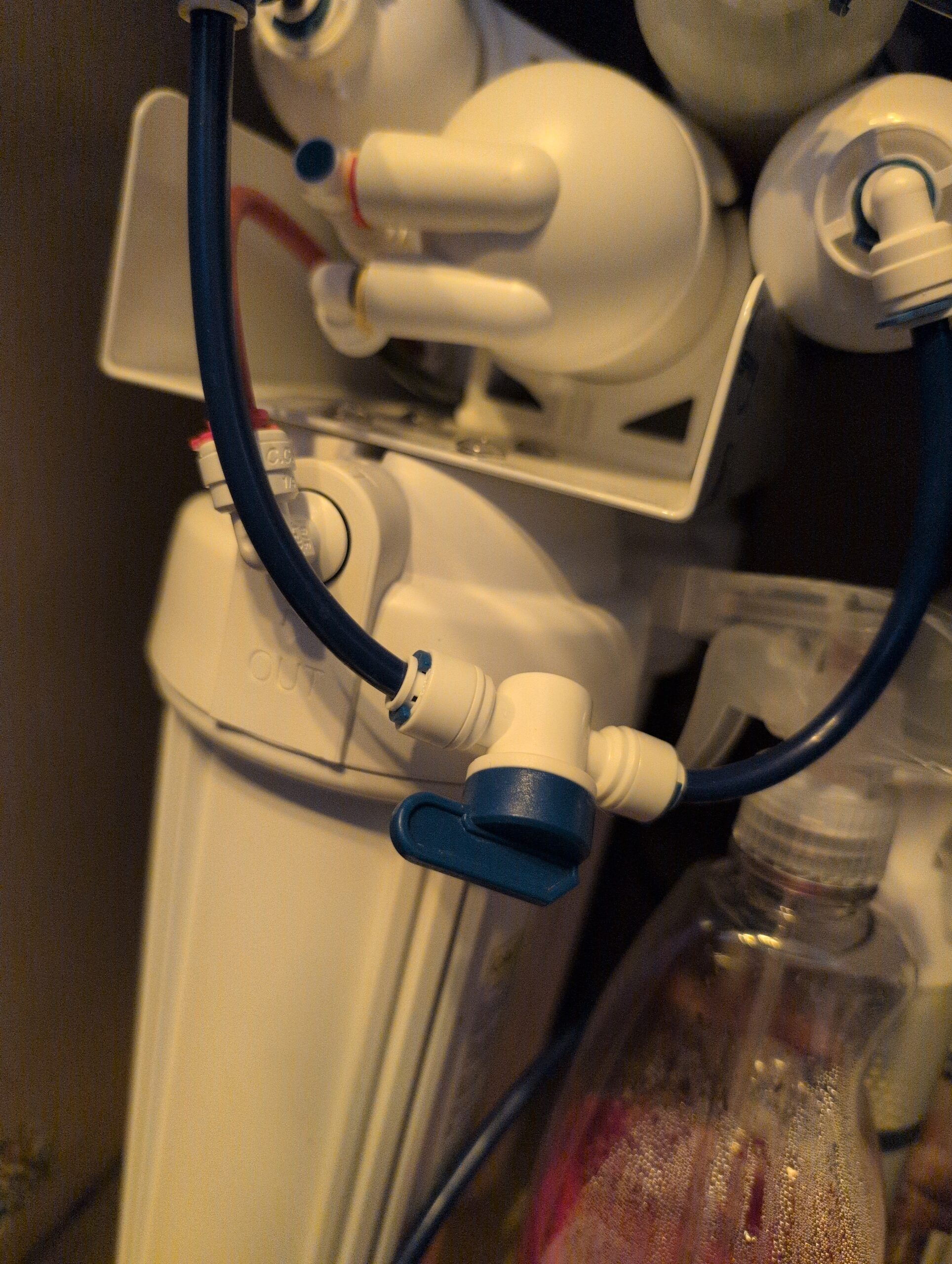
Is this RO shut off valve pack worth it after eight months?
Yes — provided your tubing is the right size, and it’s not a close call. I’d buy the pack again for the inlet isolation alone: being able to kill the whole feed with one flip turns every filter change, every stuck line, every “let me just move this” into a non-event. Mine have never leaked, dripped, or popped a tube, and I haven’t managed to break one. If your system runs 1/4-inch line, this is the wrong part — more on that below. Everyone else: this is the simplest upgrade I’ve made to how my system behaves. check current price on Amazon
Why I finally bought RO system shut off valves
My unit is a seven-stage RO — eight, really, since the last stage splits into two filters: one for my aquarium line, one for the alkalizing drinking line. Until this pack arrived, the only valve in the entire run was at the sink spout, and I had to manually switch it over whenever I wanted the second output to work. Everything else stayed live all the time. I knew the whole time that if a line let go under the cabinet, I had nothing to stop it with — not even at the inlet. So this was part plumbing, part peace of mind: kill switches wherever I could put one.
I didn’t have a brand in mind. I did the usual legwork — cheapest options, best review counts — same as I’d do for any small part, and the same instinct behind that OEM vs knockoff fridge filter comparison I wrote up: on simple hardware, the reviews matter more than the logo. Five valves showed up. Five valves work.
What eight months of using it has been like
Installation is push-to-lock — you push the tube into the fitting and it grabs. No tools, no thread tape, nothing to tighten behind the cabinet. I put half the pack to work and parked the rest in the bucket of spare parts I keep for exactly this kind of thing.
The moment they earned their keep is every filter change. I flip the inlet valve first, which isolates the whole unit from the house water without me touching the main stop. Then I close the valves at the ends of the lines, which locks the system’s own pressure inside — the part I didn’t fully appreciate until I used it. The unit isn’t mounted to anything; it sits flush on the cabinet floor. So I disconnect at the quick-disconnect, carry the whole thing outside, crack a valve, and the trapped pressure drains it into the yard. Filters come out in the driveway, no puddles in the cabinet. That used to be a towel-covered production. Now it’s a quick job I don’t think about.
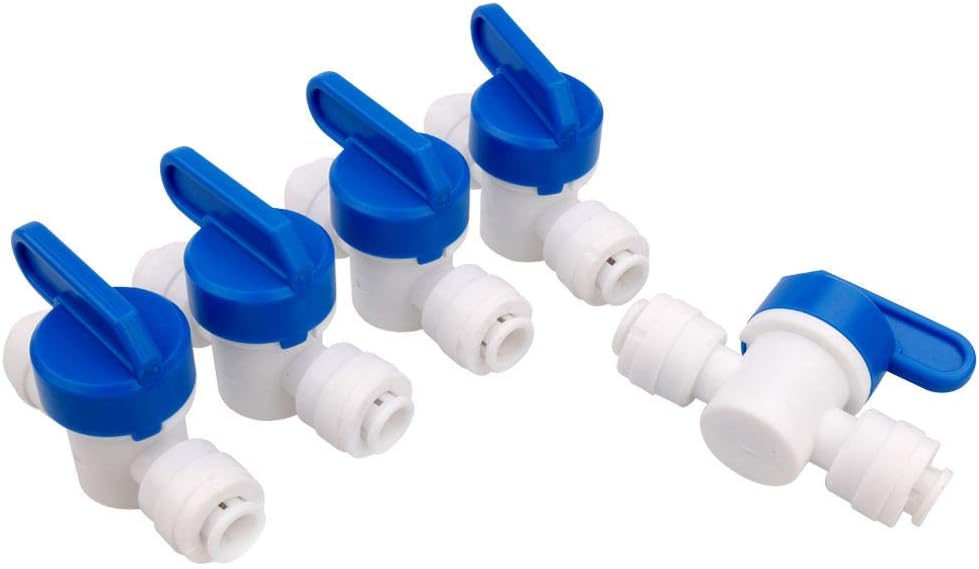
The other fix: my system’s last stage splits into two outputs — aquarium and alkaline — and without valves, those lines stay live. A valve on each output means I can run whichever line I want and park the other completely, instead of manually switching at the spout. It made my whole water routine feel less like juggling.
Eight months in, the report is boring, which is what you want: no leaks, no drips, no stiffness, no cracking, nothing seeping where it shouldn’t. It’s a high-flow setup, so there’s real water moving through these things whenever a faucet runs. They’re plastic quick-connects — nobody will mistake them for brass — but they do their one job, and they’re still in play. I haven’t had one break, and I don’t see what would make it happen; it’s a ball in a housing.
What I’d change
Honestly, not much. If I dig: I’d want more of them for less money — I’m a stingy buyer, and I’d happily take a ten-pack. But that’s a complaint about my own cheapness, not the valves. Nothing has worn out, nothing has loosened up, and if a simple part like this ever fails, that’s a manufacturing fluke, not a design flaw. Eight months in, no complaints worth the ink.
Key specs
| Material | Polypropylene (PP) |
| Fits | 3/8 inch OD tubing, both ends |
| Connection | Push-fit quick connect, no tools required |
| Type | Inline shut-off ball valve |
| Pack size | 5 valves |
| Locking clips | Not required — reusable without them |
One spec that actually matters: the listing says these fit the standard 3/8-inch water line used on most reverse osmosis systems — so check your tube size before ordering. check current price on Amazon
Who should skip it
Skip these if your tubing isn’t 3/8-inch OD. A lot of under-sink RO gear runs 1/4-inch line, and a 3/8 valve won’t fit it — no adapter, no wiggle room. Skip them for anything hot, too: plastic push-fits and hot water don’t get along, and mine only ever see cold. And skip them if you’ll be running pressures beyond what an RO system sees — these are made for RO-style pressure, and anything more is asking for trouble. Within those limits, they’re fair game: I’ve half-planned to drop one on the water pipe in the shack out back just so I can have a working sink there, and I’d trust one on a fridge line without a second thought.
Common questions
Should you buy the 3/8 inch shut off valve or the 1/4 inch version?
Match the valve to your tubing, not to what someone else’s system uses. Mine is 3/8-inch OD end to end, so these went on with no adapters. Plenty of RO systems run 1/4-inch line instead — if yours does, these are the wrong part, and no amount of tape will save you. Measure the tube before ordering; it’s the only mistake this purchase really allows.
Where do RO water shut off valve fittings go in a system?
Wherever you’d want to stop water in a hurry. Mine: one at the inlet, so the whole unit can be isolated without touching the house stop, and one on each output line — drinking, aquarium, alkaline — so any line can run or park independently. The inlet and the ends of the lines are where I’d start; those are the two spots that make filter changes and line switching painless.
Can these handle hot water?
No — cold water only. Plastic push-fit fittings deform when hot water runs through them, and these are plastic push-fits through and through. Mine sit on cold RO lines under the sink, exactly where they belong. If you need a valve on a hot line, get a metal valve rated for it; this isn’t that.
The bottom line: if you own a 3/8-inch RO system and any point in the run you can’t isolate, this five-pack fixes that quietly and cheaply, no tools required — and eight months in, mine haven’t given me a single problem. check current price on Amazon