Disclosure: This post contains an Amazon affiliate link. If you buy through it, To Broke To Quit may earn a commission at no additional cost to you.
Getting children interested in cooking can feel like a big project: recipes have too many steps, ingredients feel unfamiliar, and the kitchen can seem full of grown-up rules. Woodland Chefs: Kids Cookbook & Coloring Book takes a friendlier route. It turns the kitchen into a woodland adventure, pairing animal-themed food ideas with coloring, facts, activities, and beginner kitchen skills.
Rather than being only a recipe collection, this is designed as a hands-on activity book for young chefs. Each forest-animal chef introduces themed foods inspired by what it eats in nature or how it looks. That gives families an easy theme to build around: read, color, make something together, and talk about the animal while the food is on the table.
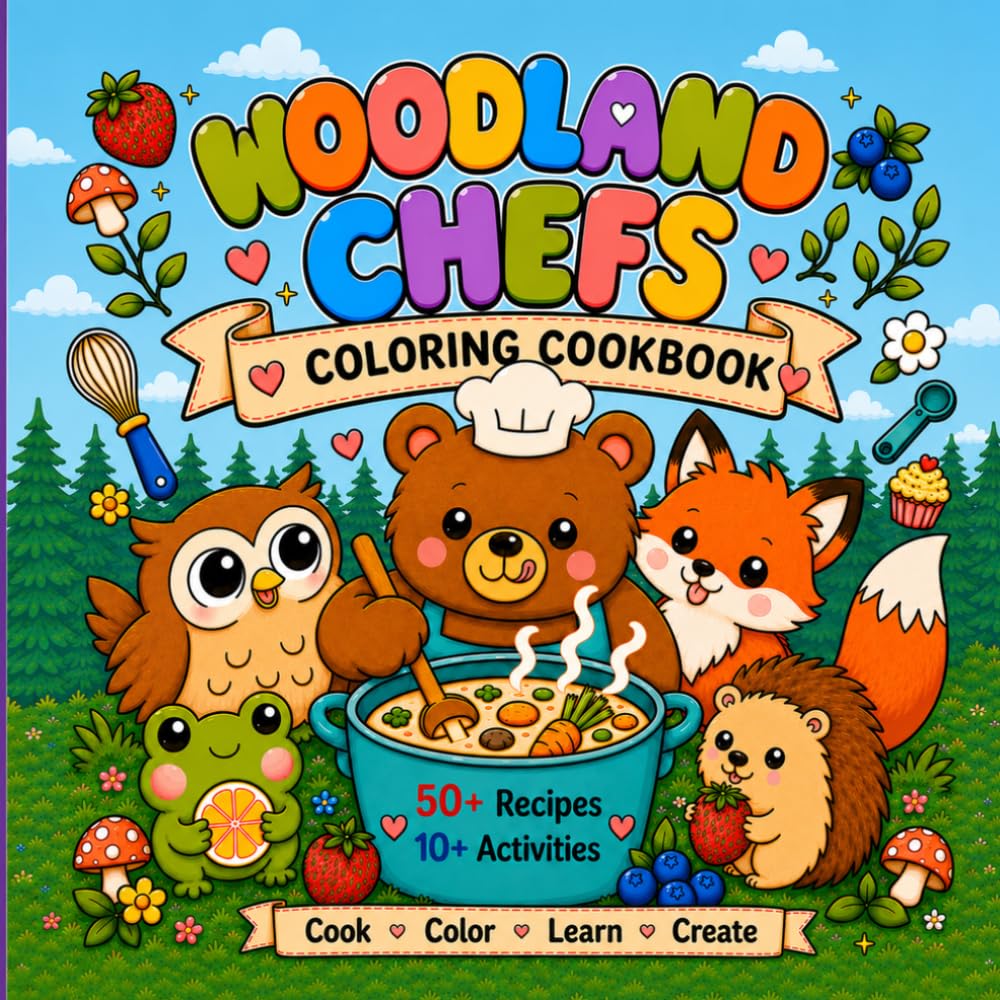
Woodland Chefs at a Glance
- Format: Kids cookbook, coloring book, and activity book in one
- Recipes: 50+ kid-friendly recipes
- Animal theme: 18 woodland animal chefs, with three themed recipes each
- Extras: 10+ activities, animal facts, large coloring pages, kitchen safety guidance, measurement help, rating pages, notes pages, and a Woodland Chef Certificate
- Best fit: Families, homeschoolers, classrooms, rainy-day activities, and children who like animals, coloring, or helping with food
Check current price and availability on Amazon
What Makes This Different From a Typical Kids Cookbook
Most children’s cookbooks focus on recipes alone. Woodland Chefs layers several kinds of engagement into one theme. A child can pick an animal chef, learn a fact, color a page, complete an activity, then help make a related snack, drink, dessert, or simple meal. That structure is useful for kids who need more than a written recipe to stay interested.
The recipes lean toward simple ingredients and whole-food options, including produce-focused snacks, refreshing drinks, and playful treats. The point is not to make every meal a nutrition lecture; it is to make a new fruit, vegetable, texture, or kitchen task feel like part of an adventure.
What Is Inside the Book?
18 Woodland Animal Chefs
Each animal serves as a small guide through the book. The animal theme gives recipes a built-in hook, whether a child is drawn to berry-loving forest creatures, crunchy garden snacks, colorful foods, or a particular animal’s look. With three recipes per chef, the theme has enough room to feel like a mini unit rather than a one-page novelty.
50+ Easy, Kid-Friendly Recipes
The recipes are intended to be approachable for children with adult supervision as needed. Expect the kinds of projects that work well for an afternoon at home: snacks, drinks, treats, and simple foods that let kids mix, measure, assemble, and taste. This is a more realistic entry point than starting a young child with complicated multi-pan dinners.
Coloring Pages, Activities, and Animal Facts
The large, bold illustrations are a nice fit for younger children and mixed-age groups. A child who is waiting for an adult to handle a hot step still has something connected to do. Animal facts on the recipe pages add a light nature-study component, while the activities create another low-pressure way to work with the theme without more ingredients or screen time.
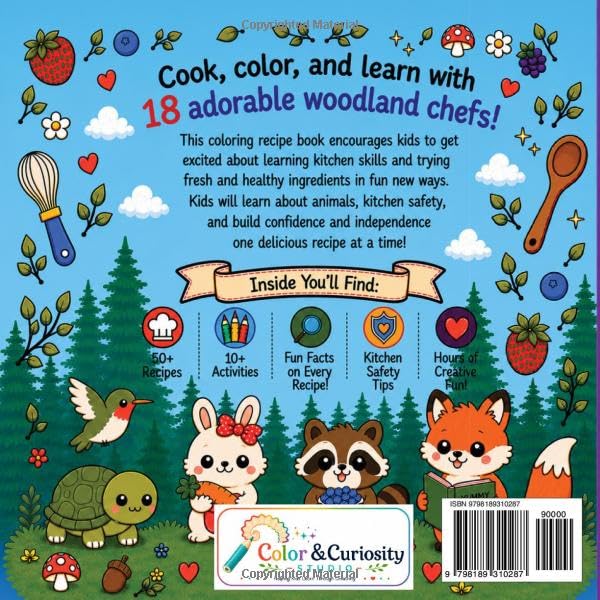
Practical Kitchen Foundations
Woodland Chefs also includes kitchen safety tips, cooking-tool guidance, and measurement aids. Cooking is more than following a recipe: children can practice counting, fractions, timing, sequence-following, food vocabulary, and age-appropriate responsibility.
Why Cooking Together Is Worth the Time
Cooking with children is rarely the fastest way to get food on the table. It can, however, be one of the more useful ways to spend unhurried kitchen time. Younger children can wash produce, stir, pour pre-measured ingredients, arrange toppings, and match tools. Older children can read directions, measure, and take ownership of parts of a recipe with appropriate supervision.
- Confidence: Finishing a simple recipe gives a child a concrete “I made that” moment.
- Food curiosity: Handling ingredients can make unfamiliar foods less mysterious.
- Math in context: Fractions, counting, timing, and comparing amounts have a purpose.
- Reading practice: Recipe steps reward careful reading and sequence-following.
- Family connection: Working side by side creates a shared routine instead of another rushed task.
Who Will Enjoy Woodland Chefs Most?
Kids Who Love Animals and Coloring
The woodland characters are the obvious draw. If your child enjoys animal books, nature themes, cute illustrations, or coloring, the food projects have an extra layer of appeal.
Parents of Picky or Hesitant Eaters
No cookbook can promise to solve picky eating. But a playful, low-pressure invitation to explore ingredients can be more useful than a battle at the table. Let your child choose the animal, help shop for one ingredient, or simply color while you make the recipe. Repeated, relaxed exposure is the point—not forcing a taste.
Homeschool Families, Teachers, and Caregivers
This book naturally combines practical life skills with reading, basic math, nutrition conversation, art, and animal learning. Use one animal chef each week, make a recipe, read the facts aloud, and save the coloring page or recipe-rating page in a learning portfolio. Classroom use can focus on no-cook or low-heat projects, food vocabulary, measurement practice, animal facts, and coloring pages.
Ways to Get More From the Book
- Give choices, not pressure. Offer two animal chefs and let the child choose.
- Assign one real job. Stirring, washing, measuring, or arranging toppings makes participation meaningful.
- Read the recipe before starting. Gather ingredients and tools together so the child can see the whole process.
- Keep safety steps adult-led. Handle sharp knives, stovetops, ovens, blenders, and hot pans according to the child’s age and ability.
- Use the rating pages honestly. Notes about what to change next time make the book more personal.
Is Woodland Chefs Worth It?
If you want a cookbook that does more than list recipes, Woodland Chefs: Kids Cookbook & Coloring Book is a charming all-in-one option. Its biggest strength is the mix: animal characters, recipes, activities, coloring pages, facts, and practical kitchen guidance all support the same goal of helping kids feel comfortable exploring food.
It will be most valuable when an adult treats it as an invitation to cook together rather than a book to hand over and forget. Pick an animal, make one simple recipe, and let the child lead the parts they can safely do.
View Woodland Chefs: Kids Cookbook & Coloring Book on Amazon
Frequently Asked Questions
How many recipes are in Woodland Chefs?
The book includes more than 50 kid-friendly recipes, organized around 18 woodland animal chefs.
Is Woodland Chefs only a cookbook?
No. Along with recipes, it includes coloring pages, activities, animal facts, kitchen skills, safety tips, measurement guidance, recipe-rating pages, notes pages, and a certificate.
Is this a good homeschool resource?
Yes. The recipes and activities can support practical life skills, reading, measurement, art, nature discussion, and food exploration. Adult supervision is still needed for heat, sharp tools, or equipment.
Can this help a picky eater?
It may make food exploration more inviting, but it is not a guarantee. Start with relaxed participation—choosing an animal, washing produce, mixing, or coloring—and avoid turning tasting into pressure.