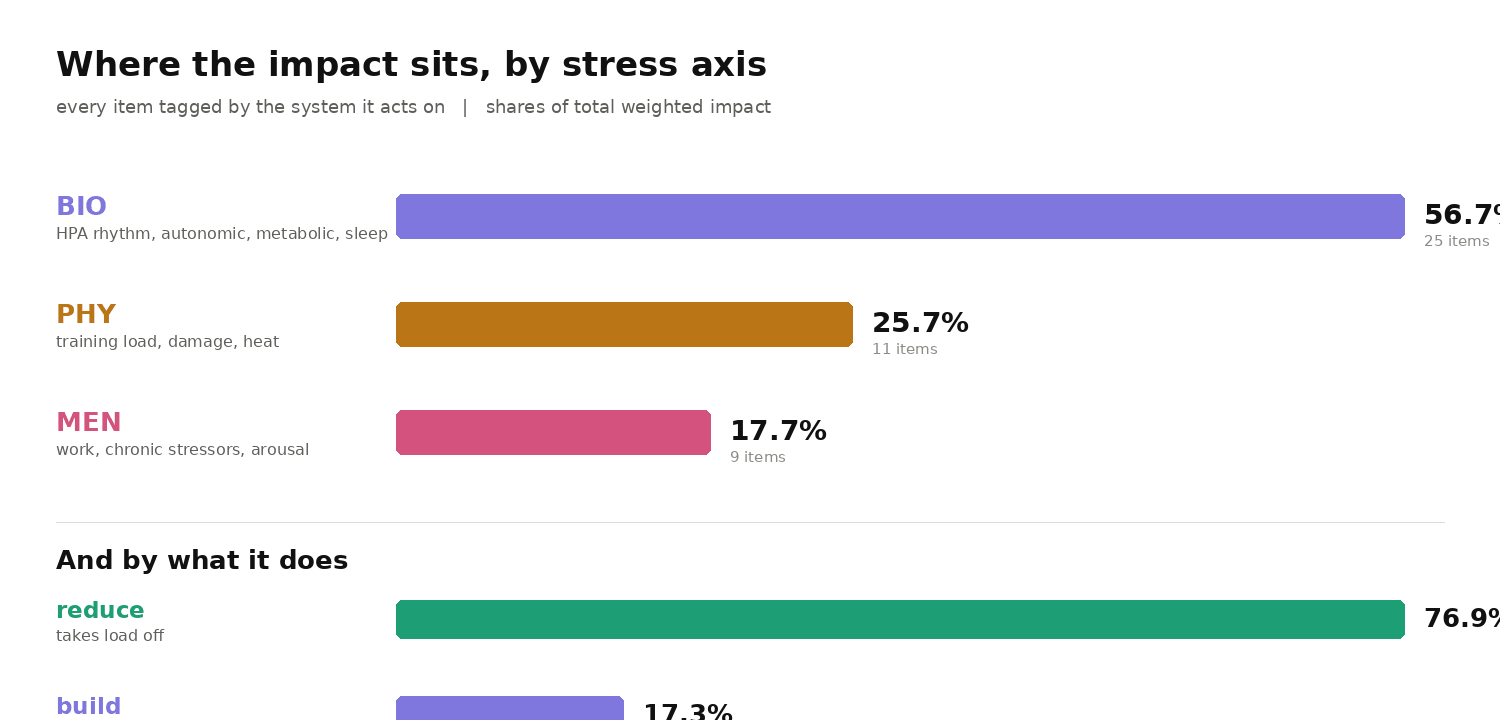
I spent a week scoring 45 recovery interventions against the actual human trials, and the result annoyed me. I built a weighted model — every intervention scored on how large its effect was, how good the evidence was, and how well it matched a specific person’s problems — then normalised the whole thing to 100%.
The behaviour accounted for 88.3%. Everything you can buy accounted for 11.7%.
That’s not an argument against supplements. Some of them work, and I’ll tell you which and why. It’s an argument about where the leverage is, and it’s roughly seven and a half to one against the thing the entire recovery industry sells. So this article is mostly about the free stuff, and honest about the small part that isn’t.
One housekeeping note, because it affects how you read everything below: recovery claims come in four very different qualities of evidence — randomised trials, observational cohorts, mechanistic reasoning, and marketing. I’ve marked which is which throughout. Where the evidence is weak I say so, including on things I’d like to be true.
What “recovery” actually means, because it isn’t a feeling
Recovery isn’t a sensation and it isn’t a wearable number. It’s a set of physiological jobs that only happen in specific sleep states, and they’re measurable.
| Overnight job | What it depends on | What breaks it |
|---|---|---|
| Growth hormone pulse — tissue repair, fat oxidation | Slow-wave sleep in the first third of the night | Caffeine, alcohol, late training |
| Autonomic shift to vagal dominance — the thing “HRV” measures | Uninterrupted NREM, no arousals | Nicotine, alcohol, hot room, apnea events |
| Glucose handling and insulin sensitivity reset | Sleep duration and circadian alignment | Sleep debt — one 4-hour night already causes measurable insulin resistance |
| Muscle protein synthesis | Amino acid availability overnight | Sleep deprivation cut postprandial MPS by 18% in a single night (PMID 33400856) |
| Cortisol clearing to its nightly floor | Timing regularity | Alcohol, evening light, irregular wake times |
That last row deserves its own section, because it’s the single most mis-sold idea in this space.
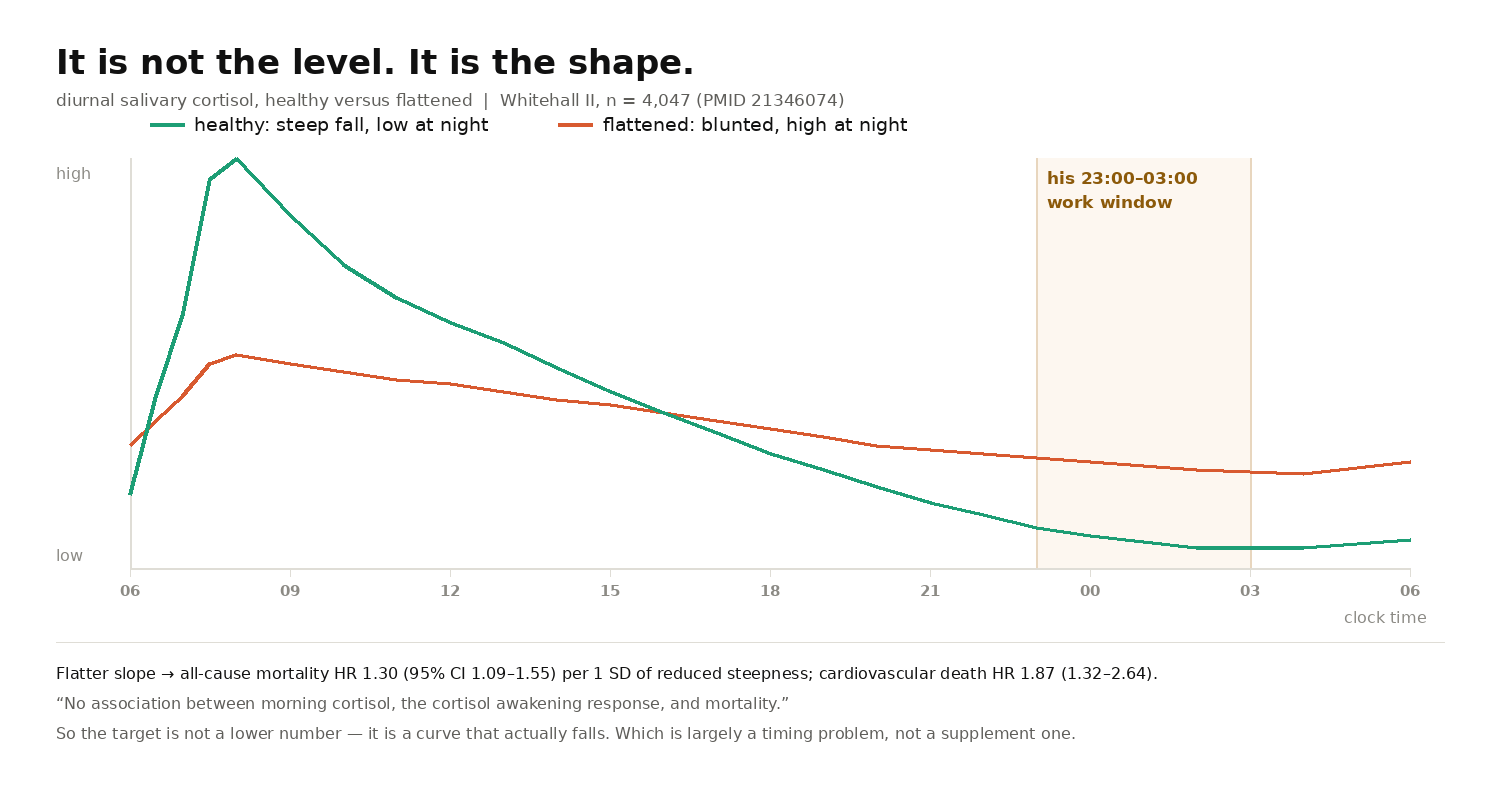
It isn’t your cortisol level. It’s the shape of the curve.
Whitehall II followed 4,047 people for 6.1 years (139 deaths). A flatter diurnal cortisol slope — meaning cortisol that doesn’t fall properly through the day — predicted all-cause mortality with a hazard ratio of 1.30 (95% CI 1.09–1.55) per standard deviation of reduced steepness, and cardiovascular death at 1.87 (1.32–2.64) (PMID 21346074).
And then the line that matters most in the whole paper: “no association between morning cortisol, the cortisol awakening response, and mortality.”
A healthy curve is high in the morning, falls steeply, and bottoms out low at night. The pathological pattern is a flat one — and specifically, cortisol that stays elevated when you’re trying to fall asleep. That reframes the entire “cortisol detox” genre. You’re not trying to lower a number. You’re trying to restore a shape.
Which also means: the popular “cortisol awakening response” test is not a useful metric. Single-day readings are dominated by situational noise and need 2–6 days of sampling to be reliable at all (PMID 17127010), and a 2025 continuous-monitoring study of 201 volunteers found that waking was not associated with an increased rate of cortisol secretion (PMID 39809311). There’s a commentary on the dispute literally titled “The cortisol awakening response: fact or fiction?” Don’t buy that test.
The five free things, ranked by how much they actually do
1. Sleep regularity. And it beats sleep duration.
This is the finding that surprised me most, and it’s the one most people have never heard.
In 60,977 UK Biobank participants with over 10 million hours of accelerometry data, the four most regular sleepers had 20–48% lower all-cause mortality and 22–57% lower cardiometabolic mortality than the least regular — and when the researchers added sleep duration to the model, it added nothing (p = 0.14–0.20) (PMID 37738616). A separate 88,975-person cohort found the least regular 5% had a hazard ratio of 1.53 (1.41–1.66) (PMID 37995126).
How to use it: same wake time, ±30 minutes, seven days a week. Alarm across the room. No snooze — in a global sample of over 3 million nights, 55.6% of sleep sessions ended in a snooze alarm, averaging 2.4 presses and 10.8 minutes, and those minutes come out of your last sleep cycles (PMID 40389592).
Evidence quality: large observational cohorts. No RCT has tested a regularity intervention against hard outcomes, so the causal claim is unproven — but the association is unusually large and consistent.
2. Move your caffeine cutoff to noon. Not “eight hours before bed.”
Here’s the number that changed my own behaviour. Pooled across 24 studies, caffeine costs 45 minutes of total sleep, 7% of sleep efficiency, and 11.4 minutes of deep sleep. The same analysis derived the lead time you actually need: a normal coffee (107 mg) needs ≥8.8 hours, and a pre-workout dose (217 mg) needs ≥13.2 hours (PMID 36870101).
If you train at 6pm with 200 mg and go to bed at 11pm, you are at five hours. Not thirteen.
The more unsettling finding: in a double-blind crossover, 400 mg at 6 hours before bed cost subjects over an hour of sleep and they did not notice (PMID 24235903). And 100 mg — one small coffee — suppressed slow-wave activity, with effects carrying into the following night even after salivary caffeine had cleared (PMID 7612156).
The uncomfortable part. A 2025 Mendelian randomisation study — the closest thing to causal evidence for a behaviour you can’t randomise — across UK Biobank (n = 485,511) and HypnoLaus (n = 1,702) found that four or more caffeinated drinks a day shorten total sleep time, by an estimated 11 to 229 minutes, while self-rated sleep quality showed no difference at all (PMID 41109744).
The authors found the brain compensates by making NREM sleep deeper, and called it “possibly due to adaptation.” So the honest trade is: less sleep time, slightly deeper sleep. And you will not feel it happening.
Evidence quality: randomised crossover trials for the timing effect; Mendelian randomisation for the habitual effect. This is among the best-evidenced levers in the whole model.
If you’re pairing caffeine with theanine, the combination has better evidence than either alone for attention and resistance to distraction (PMID 18681988) — 100–200 mg of each, morning, no later. Nutricost’s caffeine + L-theanine caps are 100 mg each, which is the right dose for this and about $14.
There’s a lot more to the caffeine question than fits here — timing versus dose versus quitting, the tolerance evidence that contradicts the usual defence, and what withdrawal actually feels like and how long it lasts. I wrote that up separately: Your Caffeine Cutoff Is Noon, Not Evening.
Unless you would rather just quit
Worth knowing what that actually involves, because the fear of it is usually worse than the thing itself — and it’s one of the few areas where the felt experience and the measured one diverge.
Withdrawal is real pharmacology, not weakness. In a review of 57 experimental studies, ten symptoms met formal validity criteria: headache (50% of people), fatigue, reduced alertness, drowsiness, difficulty concentrating, irritability. Onset is 12–24 hours, it peaks at 20–51 hours, and it resolves in 2–9 days (PMID 15448977). The popular idea that this is mostly in your head is only partly right: a balanced-placebo study found withdrawal symptoms and cognitive performance were purely pharmacological — only the craving component was expectancy (PMID 30861208).
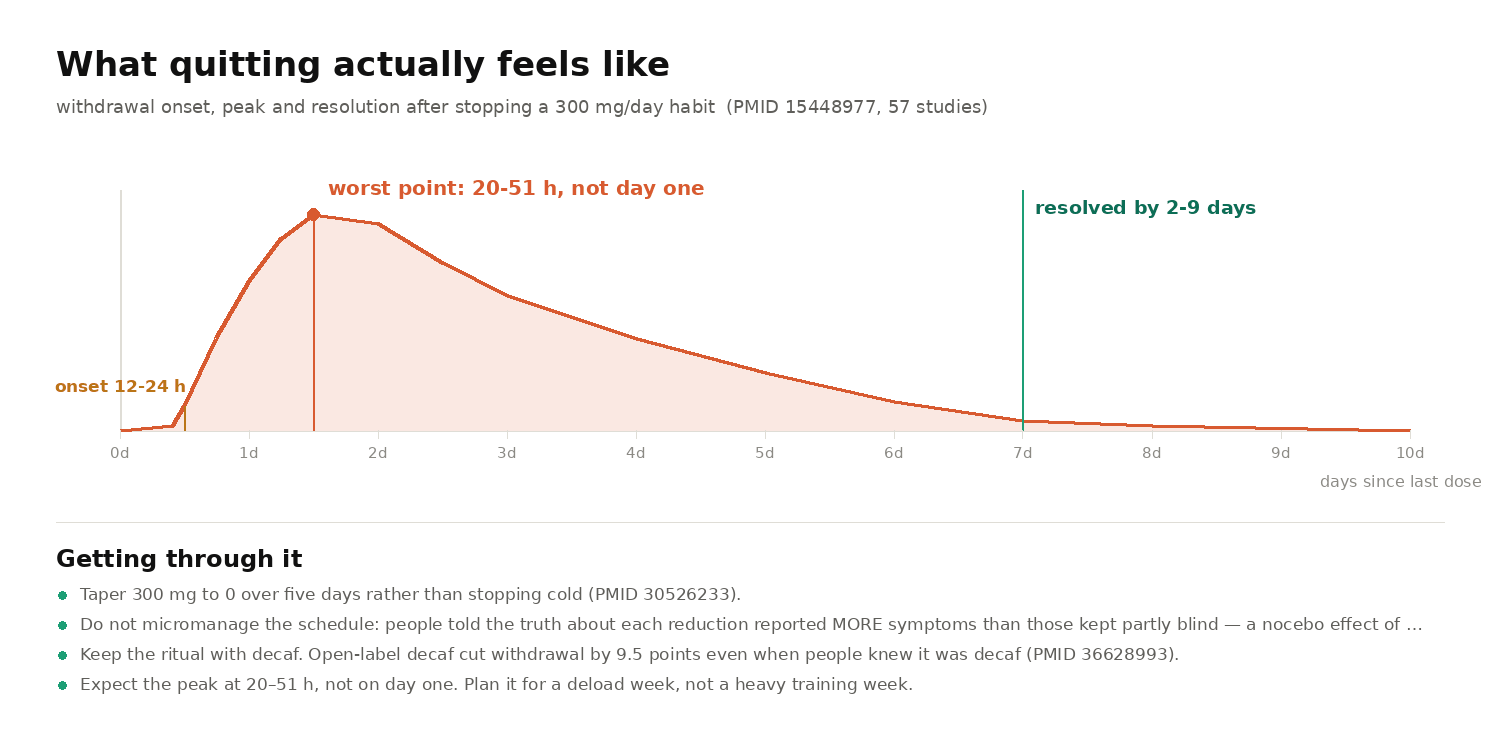
Two things that make it easier. First, taper rather than stopping cold: 300 mg down to zero over five days is the validated schedule (PMID 30526233). Second, and more interesting — use decaf to keep the ritual. Open-label decaf cut withdrawal symptoms by 9.5 points even when people were told it was decaf (PMID 36628993). The ceremony is doing real work. Same mug, same time, same chair.
The honest caveat. In the best-designed comparison (48 people, balanced crossover), there were no baseline differences in mood or performance between people consuming 217 mg a day and people consuming 20 mg (PMID 15678363). Which produces the conclusion that should settle this: quitting does not lower your baseline. It removes an oscillation. You are not giving up an edge so much as giving up the peaks and troughs.
3. Finish training at least four hours before sleep
The best-powered study of its kind analysed 4,084,354 person-nights across 14,689 people. Later exercise and higher strain produced delayed sleep onset, shorter sleep, worse quality, higher nocturnal heart rate and lower nocturnal HRV. The finding that makes it actionable: bouts ending ≥4 hours before sleep onset showed no changes at all, regardless of strain (PMID 40234380).
Exercise overall is good for sleep — a 66-study meta-analysis found moderate benefit for wake-after-sleep-onset and subjective quality (PMID 25596964). This is a timing problem, not a “don’t train” problem.
4. Get screened for sleep apnea. This one is a checkbox, not a habit.
Estimated prevalence of moderate-to-severe sleep-disordered breathing in 30–49-year-old men is 10% and rising (PMID 23589584). If you snore, wake frequently, feel unrefreshed, and carry extra weight, the STOP-Bang questionnaire takes two minutes and is free.
Why this sits so high: untreated apnea would independently explain fragmented sleep, low HRV, and part of the metabolic picture. No supplement or habit below fixes it. It’s the one item on this list that can be a binary, diagnosable, treatable condition rather than an optimisation.
5. Alcohol to zero
At every dose studied, alcohol shortened sleep onset, consolidated the first half of the night, then fragmented the second half and delayed the first REM period (PMID 23347102). Slow-wave sleep initially increases, which is exactly why it feels sedating — and why people conclude it helps. That’s not recovery; it’s a loan against tomorrow’s sleep architecture.
Does the “stress” story hold up? Partly, and not the way it’s sold
You’ll read that stress is destroying your recovery. There’s real evidence, but it’s more specific than the claim.
What’s genuinely causal and objective — psychological stress and physical healing:
| Finding | Effect | Source |
|---|---|---|
| Caregivers’ wound healing vs matched controls | 48.7 vs 39.3 days | PMID 7475659 |
| Exam stress, same students (within-subject) | healing 40% slower, IL-1β mRNA −68% | PMID 9625226 |
| High-hostility couples vs low | healed at 60% of the rate | PMID 16330726 |
| Dementia carers vs controls, flu vaccine | seroconversion 16% vs 39% | PMID 10030328 |
| Caregivers’ IL-6 over 6 years | rose ~4× faster — and did not reverse | PMID 12840146 |
And the qualifier that makes it useful: in Cohen’s work on stress and infection, stressors lasting one month or more raised risk (OR 2.7, 95% CI 1.4–5.1), while acute events lasting days were not associated at all (PMID 9619470).
So “reduce your stress” is bad advice and “change the thing that has been true for six months” is the actual lever. A bad day does not cost you recovery. A bad year does.
Now the part I have to be honest about. Psychologically-targeted interventions have weak objective evidence. In a 41-trial review (n = 2,993), meditation had moderate evidence for anxiety but insufficient evidence for any effect on sleep in healthy adults (PMID 24501780). MBSR reduced CRP only as a non-significant trend (p = .075) in one trial (PMID 22820409). Wound-healing and immune outcomes respond to the stressor changing, not to a coping app.
Meditation is cheap and probably harmless. It is not the mechanism.
The supplement shelf: 11.7%, and the first thing you can buy is 18th
Here’s the figure. Read the split bar first — that’s the thesis of the article in one image.
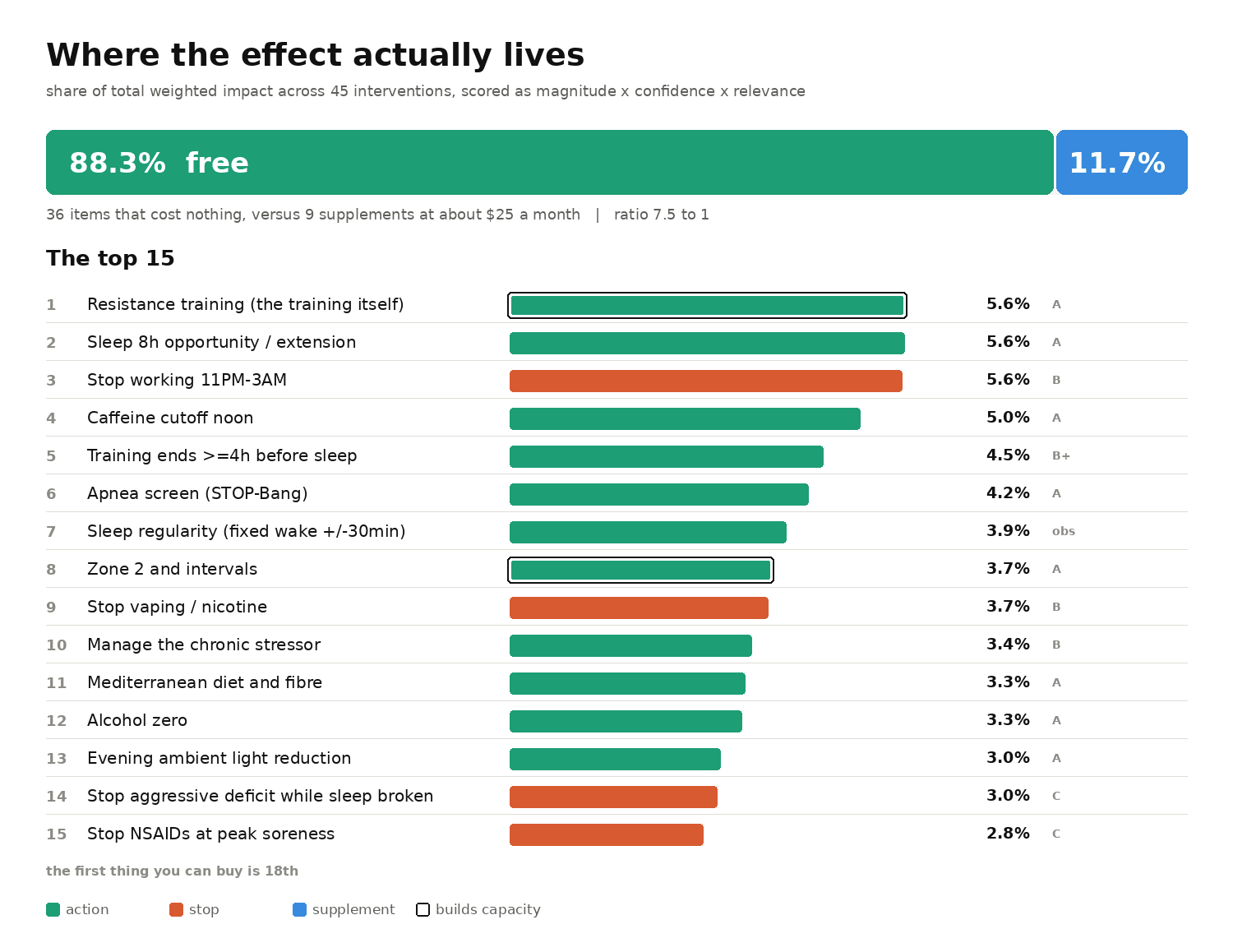
Notice something in that ranking you won’t see anywhere else: the free items occupy every position down to number seventeen. The first thing you can buy — psyllium — is eighteenth.
And look at number one. It is not a supplement, a gadget, or a hack. It is doing the training. That is the part this article’s own earlier drafts under-weighted, and it gets its own section at the end.
And now the honest caveat about the numbers themselves. Those percentages are a priority ordering, not a budget. Several items overlap heavily — fixing your caffeine timing makes your sleep opportunity easier, and both interact with regularity — so you should not add them up. The defensible claims are the ranking and the roughly 7.5-to-1 ratio. Not the decimals.
What’s actually worth buying
Psyllium husk, ~10 g a day (18th overall, and the best-value item on the shelf). I’ve covered the wider fibre case in the greens powder piece — this is the cheap form of what those products charge for. A meta-analysis of 35 trials found it lowered fasting glucose by 37 mg/dL in type 2 diabetics, with the explicit finding that benefit tracks how poor your glycemic control is — so a healthy person gets close to nothing, and someone with impaired fasting glucose gets something real (PMID 26561625). Separately, 10.2 g/day cut total cholesterol 4% (PMID 10648260), and safety pooled across 19 studies was “well tolerated and safe.” Buy unflavoured husk — capsule brands are the same fibre at several times the price. NOW’s 500 mg caps are the convenient option if you won’t use powder.
Creatine monohydrate, 3–5 g a day. The most reliable supplement in existence for strength, and one of the few where the cognitive evidence is also real. Quadriceps strength effect size 0.266 (95% CI 0.150–0.381) (PMID 25946994). The cramp-and-dehydration scare is dead — there’s a review titled “Putting to rest the myth of creatine supplementation leading to muscle cramps and dehydration” (PMID 18184753). Buy monohydrate; skip HCl, “buffered,” and gummies. Nutricost’s 500 g tub is about $30 and lasts months at 5 g/day.
Protein, if it’s how you hit your target — not as a bonus. The ceiling is 1.62 g/kg/day: past that, added protein produced no further gains in lean mass across 49 RCTs (PMID 28698222). For a 90 kg person that’s ~146 g, so a 170 g target is already past the point where more protein buys more muscle. It’s convenient food, not a supplement effect. Muscle Milk Genuine is 32 g a serving if you’d rather drink it than cook it.
Two more, but only if a blood test says so
Magnesium. Where magnesium status is genuinely low, it does something measurable: in type 2 diabetics with low serum magnesium, oral supplementation improved HOMA-IR from 5.0 to 3.8 (P = 0.005, PMID 12663588), and pooled across trials it shortened sleep latency by 17.4 minutes (95% CI −27.3 to −7.4, PMID 33865376). But a 2026 systematic review of 12 RCTs called the overall findings inconsistent, with low certainty — so treat this as fixing a deficiency, not as a sleep hack. Magnesium glycinate powder is the form that’s gentlest on the gut; the popular claim that glycinate absorbs better than oxide is not supported by any head-to-head sleep trial.
Glycine, 3 g before bed. Thin but consistent: it shortened latency to sleep onset and to slow-wave sleep on polysomnography, and reduced next-day fatigue under partial sleep restriction (PMID 22529837). Grade C — old studies, small samples, and some didn’t report sample sizes at all. Same category as magnesium: cheap, low-risk, worth trying, not worth expecting much from. Glycine powder is about $20 for a pound, which is roughly a year at 3 g a night.
What to skip, and why
Chromium — two independent reviews found no significant effect on glucose or lipid metabolism in people without diabetes (PMIDs 17519436, 12081828). Inositol — every retrieved trial is in women with PCOS; zero data in men. Alpha-lipoic acid for glucose — the evidence is intravenous, for diabetic neuropathy. Apple cider vinegar capsules — real acute meal-level effect, nothing on fasting glucose or HbA1c. Multivitamins for prevention — the COSMOS cognitive signal is real but comes from adults with a mean age around 70, and the USPSTF says evidence is insufficient for cardiovascular or cancer prevention (PMID 35727271). If you take one anyway, at least get one without iron for a reason I’ve written about separately.
And the one worth flagging most clearly: antioxidant megadoses around training. A 2026 review of eccentric exercise organises an entire theme as “targeted, cautious use of antioxidant supplementation” (PMID 42029507), and post-exercise cold immersion blunted strength and hypertrophy gains versus active recovery (PMID 26174323). The reactive oxygen signal is part of the adaptation signal. Blunting it is the opposite of recovery.
That logic extends to cortisol-lowering adaptogens during a training block. If cortisol is part of how training signals adaptation, then a supplement whose mechanism is cortisol suppression is in tension with the training — not automatically compatible with it. No trial has tested this. I’d rather tell you it’s unknown than sell you the bottle.
Where the marketing and the mechanism disagree
Worth knowing which popular interventions the trials have actively contradicted:
- Blue-light-blocking glasses. A systematic review found only 12 studies with inconsistent results and a sleep-efficiency confidence interval that crossed zero; a 2025 meta-analysis of the available RCTs was null for latency, total sleep time, efficiency and wake-after-sleep-onset (PMIDs 37192881, 41341515). The documented lever is light intensity and duration, not colour. Dim the room.
- Cold plunges for recovery. They work for perceived soreness and they blunt hypertrophy adaptations (PMID 26174323). Both are true. If you lift for muscle, don’t plunge straight after.
- Weekend catch-up sleep. After five nights of five hours, two recovery nights restored the lipid response but not the insulin sensitivity (PMID 30892916). You cannot bank it.
- The “so it’s basically the same as sleep” devices. Against multi-night polysomnography, a leading consumer ring had excellent sensitivity (94%+) but only 73–75% specificity for detecting wake (PMID 38382312). It’s better at telling you how long you slept than whether you woke up — which is precisely the metric that matters if your problem is fragmentation.
The part that changes the whole frame: capacity, not just load
Everything above reduces load. That’s half the picture, and alone it’s misleading, because it implies the goal is to be as un-stressed as possible. It isn’t.
The goal is capacity. Net resilience is capacity minus load, and the two are not equivalent levers: reducing load has a floor — you can’t sleep more than about nine hours, and you can’t train less than zero without losing the adaptation. Capacity has no such floor.
There’s also a sharper distinction than “stressed” versus “not.” In the allostasis literature, resistance, resilience and vulnerability are three different states (PMID 22078931). Resistance — no response to the stressor at all — is not resilience. Resilience is a full response followed by complete recovery. That’s why HRV isn’t purely “how much stress you’re under”; it partly reflects how fast you come back.
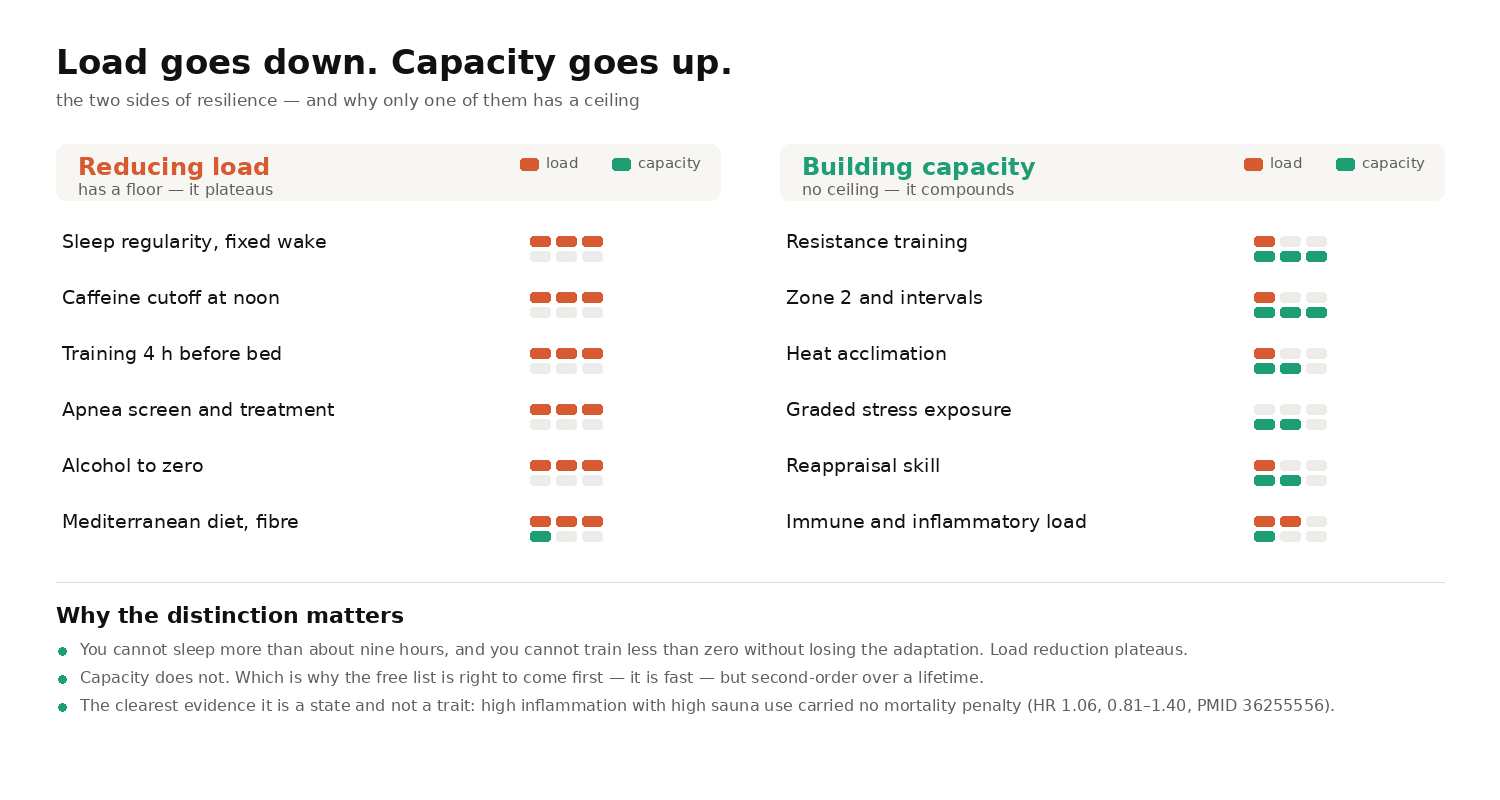
So the load-reduction list above is right to be first — it’s fast and free. But it’s second-order to building capacity over decades.
| Lever | Reduces load | Builds capacity |
|---|---|---|
| Sleep regularity, caffeine timing, training timing, apnea screen, alcohol | ●●● | — |
| Resistance training | ● | ●●● |
| Zone 2 and intervals | ● | ●●● |
| Mediterranean-style diet and fibre | ●●● | ●● |
| Graded stress exposure | — | ●● |
| Antioxidants, cortisol-lowering adaptogens | ● | − |
One demonstration worth knowing, because it’s the cleanest evidence that resilience is a state you manage rather than a trait you have. In 2,575 Finnish men followed for a median of 27.8 years, high inflammation (hsCRP > 3 mg/L) with low sauna use carried all-cause mortality HR 1.28 (1.12–1.47). High inflammation with high sauna use carried 1.06 (0.81–1.40) — no association at all (PMID 36255556).
Same inflammatory burden. The heat-adapted group doesn’t pay the mortality cost of it. That’s resilience quantified: not the absence of the stressor, but the absence of the penalty.
What I’d actually do, in order
- This week, free: fix your wake time to ±30 minutes, seven days a week. Set a caffeine cutoff at noon. Move training to finish four hours before bed. Do the STOP-Bang.
- Weeks 2–6, free: get to eight hours in bed. Hot shower 1–2 hours before bed — passive body heating shortened sleep latency across 13 studies (PMID 31102877). Get an actual blood panel before you supplement anything.
- Only then, cheap: psyllium, creatine, protein if it fills a gap. That’s roughly $25/month and it’s genuinely most of what the supplement category has to offer.
- Ongoing: train for capacity, not just to avoid load. Which mostly means keeping the training and keeping the diet when things get busy — those are the two levers with no ceiling.
The reason I find the 88/12 split worth writing about isn’t that supplements are useless. It’s that the recovery industry has convinced a generation that the 11.7% is the whole game — and the 88.3% is free, unglamorous, and mostly a matter of timing.
All effect sizes and PMIDs in this article were retrieved and verified against Europe PMC. Where a claim rests on observational rather than randomised evidence, that is stated in the text. Nothing here is medical advice; the two items worth a clinician’s attention are the sleep-apnea screen and any supplement interaction if you take prescription medication.