Your bedroom is the stuffiest room in the house by 2 a.m. With the door shut, one person sleeping can push overnight CO2 well past 2,000 ppm in a small room. Researchers at the Technical University of Denmark measured average overnight CO2 at about 2,585 ppm with the window closed and 660 ppm with it open — and when CO2 was lower, objectively measured sleep quality and next-day mental performance both improved significantly (Indoor Air, 2016). A window fan is the cheap fix.
We earn a commission if you buy through links on this page, at no extra cost to you.
This Vornado Transom window fan review is for anyone who wakes up groggy in a stale room — or who wants steady fresh air without the roar of a twin-fan window unit. The short version: the Transom is the most powerful, quietest, and most efficient window fan Wirecutter has tested in its years of window-fan reviews, and it holds up in weather that destroys cheaper units. It costs more than the plastic twins at the hardware store, and it has real flaws. Read on for the measured numbers, the honest downsides, and who should skip it. If you already know you want one, check current pricing on the Vornado Transom at Amazon.
What the Vornado Transom does well
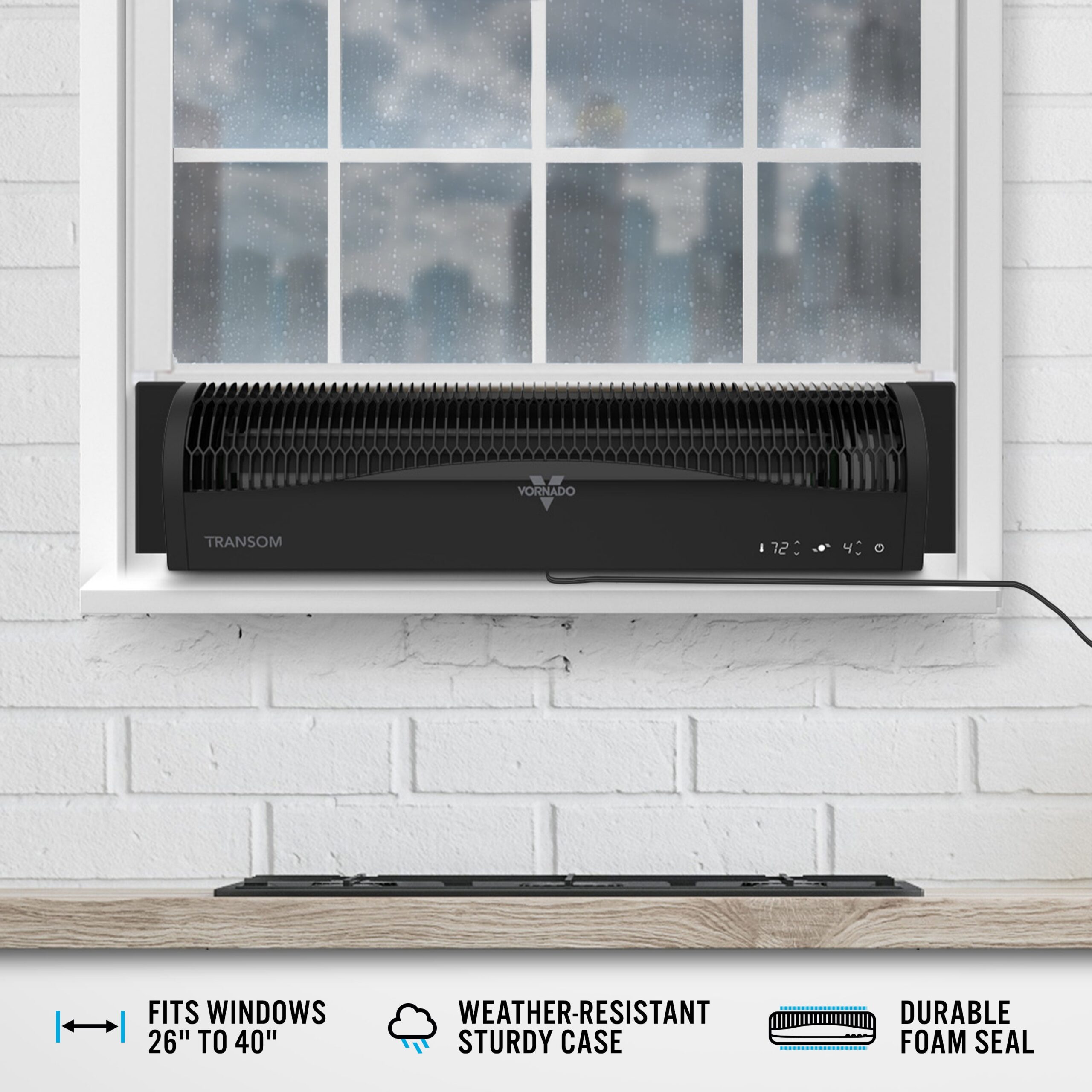
Most window fans are two small fans bolted together. The Transom is one long fan that spans nearly the whole width of the unit, and at about 7 inches tall it sits far lower in the window than the 12-inch-plus twins. That shape is easier to balance on a sill and leaves more of your view intact, per Wirecutter’s testing.
It’s also genuinely powerful. Wirecutter measured air speed at about 10 mph on low and 11 mph on high coming out of the Transom — nearly twice as fast as the Genesis and Holmes models it tested, and a bit faster than the Bionaire that was its former top pick. In a practical test, the Transom moved a hanging string from 24 feet away; the Genesis and Holmes units barely reached 16 feet. Because it circulates air around the whole room instead of blasting one spot, the draft feels like a room-wide breeze rather than a wind tunnel.
It uses about half the energy
Vornado’s signature vortex design pays off on the electric bill. Wirecutter measured about 26 watts on low and 29 watts on high, versus 50 to 70 watts for the other fans in its tests. Its estimate at typical U.S. rates came to about $4 a month to run on high nonstop, against about $9.60 for the budget Bionaire pick. Prices and rates change, but the efficiency gap is the point.
It’s quiet enough for a bedroom
On its highest setting, Wirecutter measured the Transom at about 49 decibels — roughly as quiet as the other tested window fans on their lowest setting. No stray high-pitched squeal either: just a steady white-noise rumble that fades into the background.
It shrugs off weather
Nearly every other window fan Wirecutter tested warns “NOT FOR OUTDOOR USE” on the packaging — despite sitting in a window all summer. The Transom doesn’t. Wirecutter’s testers wrote that the Bionaire and Holmes units didn’t hold up through a nor’easter, while the Transom has kept going through several. Vornado backs it with a five-year warranty, which is long for a window fan.
Specs and measured performance
Manufacturer specs from Vornado and the Amazon listing, with test data from Wirecutter where noted. Prices fluctuate, so treat the price row as a starting point, not a quote.
| Spec | Vornado Transom (FA1-0136) |
|---|---|
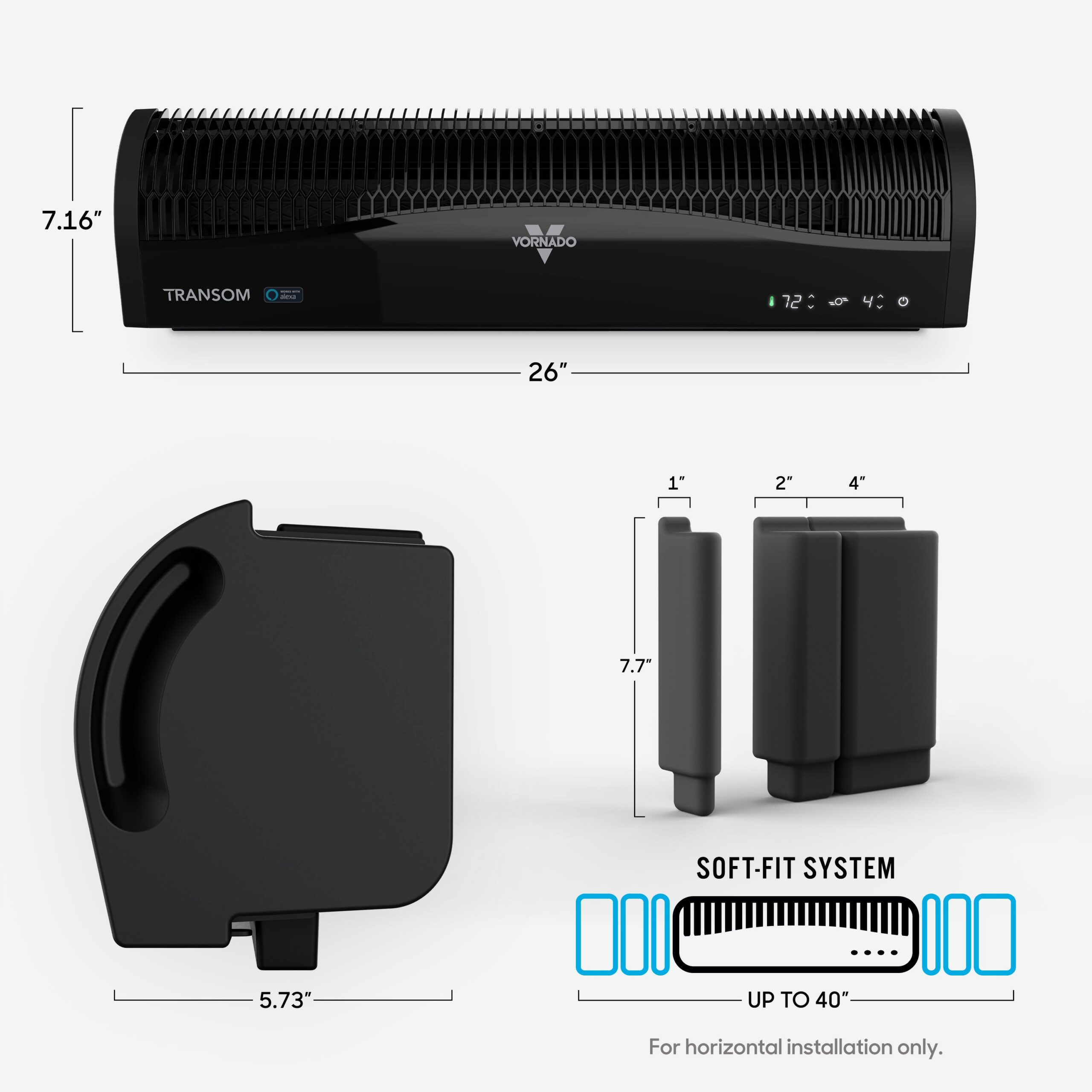
| Dimensions | 7.16″ H x 26″ W x 5.73″ D |
| Speeds / modes | 4 speeds; intake and exhaust (electronically reversible); auto temperature control |
| Window fit | Single- or double-hung windows 26″–40″ wide, opening at least 8″ tall; horizontal install only |
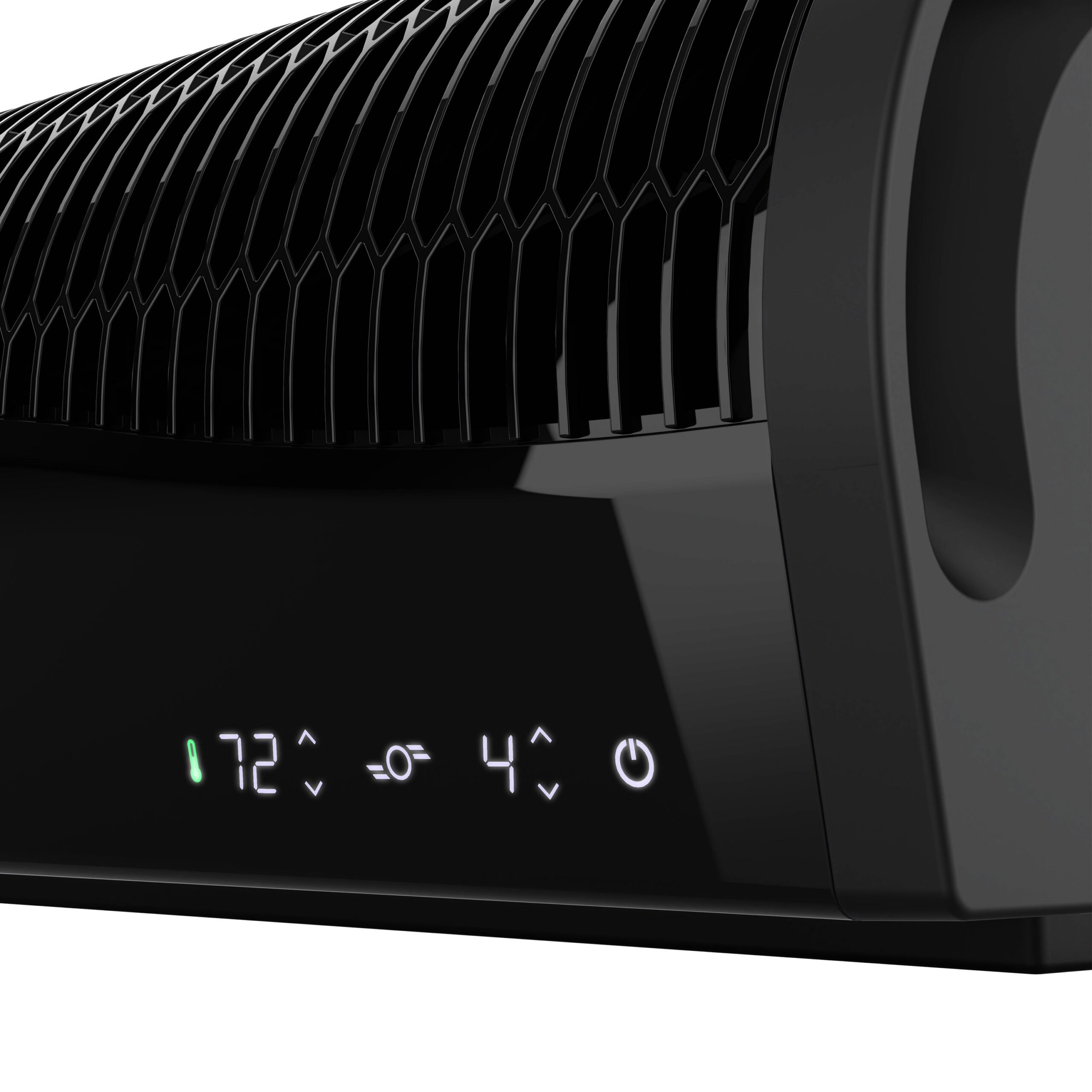
| Remote control | Yes, plus automatic-dimming LCD panel on the unit |
| Air speed (tested) | ~10 mph low / ~11 mph high, measured by Wirecutter |
| Power use (tested) | ~26 W low / ~29 W high, measured by Wirecutter |
| Noise (tested) | ~49 dB on high, measured by Wirecutter |
| Warranty | 5 years |
| Price | About $109.99 MSRP — check current pricing at Amazon |
Where it falls short
No fan is perfect, and Wirecutter’s testers flagged three real issues:
- Cleaning is a pain. You can vacuum the outside, but there’s no simple way to reach the blades inside the housing if dog hair or dust gets past the grille.
- The seal isn’t perfect. The included foam blocks work better than the accordion wings on most window fans, but they still left gaps — and gaps mean bugs and bypass air. Wirecutter recommends adding foam weatherstripping tape around the frame.
- The remote is mediocre. The on-unit controls are clear and the LCD auto-dims at night, but the tiny remote is unintuitive and easy to lose.
There’s also a spec conflict worth knowing before you buy: Vornado says the Soft-fit system seals the window “without having to remove your screen,” while the Amazon listing warns that screen removal may be necessary depending on the depth of your window. Assume you might need to pop the screen out — it depends on the frame.
Vornado Transom vs. the competition
Wirecutter’s budget pick is the Bionaire twin window fan. It’s cheaper, and it moves a lot of air — but the draft is gusty and tunnel-like, it uses roughly twice the electricity, and it isn’t built to survive rain. The Genesis and Holmes models Wirecutter tested were a full step slower and threw air only about two-thirds as far.
Vornado also sells the Transom AE, a smart-home version with app and voice control that Wirecutter names its upgrade pick for people who want automation. If you just need fresh air and a remote, the standard Transom covers it.
Who should buy it — and who should skip it
Buy the Vornado Transom if: your bedroom goes stale overnight and you want real air exchange; you want summer airflow without an AC unit or as a helper to one; you need to pull kitchen or bathroom odors out; or you want a fan that’s quiet enough to sleep next to.
One owner I talked to bought this specifically for winter — pulling cold outside air in to fight a rising CO2 problem in a bedroom — and reports it’s the freshest his room has ever been. Intake mode in winter works, provided you don’t mind the cold. Exhaust mode handles the hot months by pushing stale air out of the top of the room.
Skip it if: your windows are casement, crank, or tilt-and-turn style — Vornado explicitly warns against installing the Transom on those; your window is under 26 inches wide or opens less than 8 inches tall; or you’re expecting an air conditioner. It moves air; it doesn’t refrigerate it.
FAQ
Does the Vornado Transom actually cool a room?
It doesn’t refrigerate. It moves air — measured at roughly 10–11 mph at the outlet — and on intake it pulls cooler outside air in, which can drop a room’s temperature when it’s cooler out than in. On exhaust it pushes warm stale air out the top of the room.
Do I have to remove my window screen?
Vornado says no — the Soft-fit foam system seals around the screen. However, the product listing warns screen removal may be necessary depending on window depth. Test your frame; shallow sills are the usual problem.
Is the Transom loud enough to sleep with?
Wirecutter measured about 49 dB on high — roughly as quiet as other window fans on low — and described the sound as a steady white-noise rumble that fades into the background. The LCD panel also auto-dims, so it won’t light up your room at night.
What windows does it fit?
Single- or double-hung windows 26 to 40 inches wide, with an opening at least 8 inches tall. It installs horizontally only, and it’s not for casement, crank, or tilt-and-turn windows.
How long is the warranty?
Vornado backs the Transom with a five-year warranty — unusually long for a window fan, and a sign the company expects it to last.
The bottom line
The Vornado Transom is the best window fan an independent test lab has measured: the strongest airflow, roughly half the energy use of its rivals, genuinely bedroom-quiet, and weatherproof enough to live in a window year-round. You pay for that — it’s a $100-plus fan, not a $40 one — and you’ll want extra weatherstripping and patience with a mediocre remote. For a stuffy bedroom or a kitchen that needs real air exchange, it’s worth the premium. Check current pricing on the Vornado Transom at Amazon — prices move, so what you see is what you’d actually pay.